
I used to think hustle meant pushing harder than everyone else. More hours. More pressure. Less rest. I believed success belonged to the person who could tolerate the most exhaustion.
Over time, I learned something important. A real hustler mindset is not built on burnout. It is built on brain health.
If my focus is weak, my decisions suffer. If my stress is unmanaged, my creativity drops. If my sleep is poor, my resilience collapses. That is why understanding 10 ways to keep your brain healthy changed how I approach ambition and growth.
In this article, I am sharing practical, research-backed brain health tips that align with trusted mindset principles from experts like Carol Dweck and performance insights published by Harvard Business Review. This is not hype. This is sustainable high performance.
Let us build hustle the right way.
Also Read


Why Brain Health Is the Real Foundation of Success
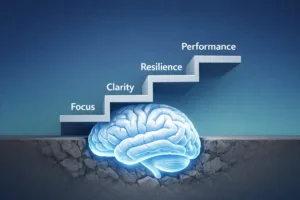
Many people focus on motivation. Very few focus on cognitive health improvement.
Your brain controls focus, emotional regulation, memory, creativity, and decision-making. Without a healthy lifestyle for brain function, hustle becomes chaotic effort.
The American Psychological Association has repeatedly discussed how chronic stress impacts memory and executive function. That means unmanaged hustle directly damages the very tool you need to succeed.
If you want long-term success, your brain must be protected and strengthened daily.
Understanding Mindset Levels and Challenge Intensity
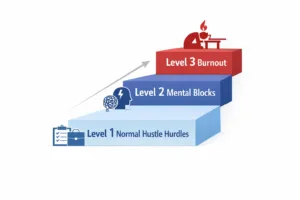
Not all struggle is the same. I have experienced all three levels below, and each one requires a different response.
Level 1 Normal Hustle Hurdles
This includes temporary fatigue, mild self-doubt, or short motivation dips. These are natural. At this stage, daily habits for brain health and better recovery fix most problems.
Level 2 Mental Blocks
Here you feel stuck. Brain fog increases. Focus drops. You procrastinate even though you care.
I understand how frustrating this mindset block can be. You want progress but feel resistance internally.
This usually signals poor stress management for brain health or lack of structured mental fitness strategies.
Level 3 Burnout
Burnout is deeper. Emotional exhaustion, irritability, detachment from work, and reduced performance appear together. Occupational research and leadership discussions in Harvard Business Review highlight how chronic overload reduces long-term effectiveness.
Burnout is not weakness. It is a warning.
Now let me share practical solutions.
10 Ways to Keep Your Brain Healthy
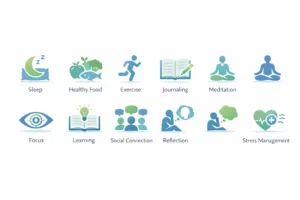
1. Protect Your Sleep as a Performance Tool
Sleep supports memory consolidation and emotional regulation. Without proper sleep, even the best memory enhancement techniques fail.
What I do:
Maintain a consistent sleep schedule
Avoid late-night screen exposure
What I avoid:
Treating sleep like optional downtime
Relying on caffeine to compensate
Sleep is one of the most powerful brain health tips available.
2. Choose Foods for Brain Health
Nutrition impacts cognitive stability. Foods for brain health include fatty fish, nuts, leafy greens, berries, and whole foods rich in antioxidants.
These support long-term cognitive health improvement and stable energy.
Avoid excessive sugar and heavily processed meals. Hustle requires quality fuel.
3. Practice Neuroplasticity Exercises
Your brain adapts based on repetition. That is neuroplasticity.
Inspired by the research of Carol Dweck, I deliberately choose challenges that stretch my thinking.
Brain boosting activities such as learning a new skill, reading deeply, or solving complex problems strengthen mental flexibility. This is how to improve brain function naturally.
4. Move Your Body to Boost Memory
Exercises to boost memory do not require extreme workouts. Brisk walking, strength training, or mobility work improve blood flow to the brain.
Whenever I feel mentally blocked, movement resets my clarity faster than forcing productivity.
5. Build Structured Daily Habits for Brain Health
Consistency creates stability.
My daily habits for brain health include:
- Morning reflection
- Focused work sessions
- Short mental breaks
- Journaling to clear mental clutter
These mental fitness strategies reduce decision fatigue and sharpen focus.
6. Strengthen Stress Management for Brain Health
Stress is part of ambition. Chronic stress is destructive.
The American Psychological Association explains how prolonged stress affects concentration and emotional balance.
I use breathing techniques, defined work boundaries, and digital breaks. Smart hustle manages pressure instead of glorifying it.
7. Protect Deep Focus
Distraction fragments cognitive energy. Multitasking lowers performance efficiency.
Cognitive health improvement requires controlled attention. I schedule distraction-free time blocks and turn off unnecessary notifications.
Focused effort beats scattered intensity.
8. Develop Emotional Regulation
Emotional control separates sustainable performers from reactive grinders.
Performance discussions often referenced in Harvard Business Review show that emotionally regulated leaders make stronger decisions under pressure.
Pause before reacting. Reframe setbacks as data. Separate emotion from evidence.
9. Schedule Recovery Intentionally
Recovery is strategic, not lazy.
Brain boosting activities like creative hobbies, social connection, and nature exposure restore mental capacity. Without recovery, hustle transforms into exhaustion.
10. Reflect and Recalibrate Weekly
Every week I ask:
- What drained my energy
- What improved my clarity
- Where did I push unnecessarily
This reflection protects long-term cognitive strength.
Common Mindset Traps and What They Indicate

Trap 1 If I slow down, I will fall behind
This often signals insecurity, not ambition.
Trap 2 Productivity equals self-worth
This may indicate internal validation struggles.
Trap 3 Constant comparison
Comparison increases stress load and reduces focus.
Trap 4 Ignoring physical symptoms
Headaches, irritability, insomnia, and brain fog are signals. Your brain warns before it collapses.
Step by Step Plan to Build Resilience
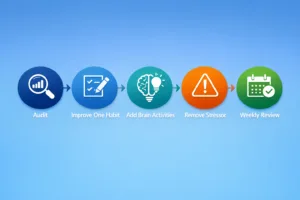
Step 1 Audit your sleep, nutrition, and stress
Step 2 Improve one habit at a time
Step 3 Add brain boosting activities gradually
Step 4 Remove one unnecessary stressor
Step 5 Review weekly and adjust
What not to do:
- Adopt extreme routines overnight
- Ignore emotional fatigue
- Follow all or nothing thinking
Resilience builds through consistent adjustment.
When Not to Push Through
There are moments when hustling harder is harmful.
Stop and seek professional support if you experience:
- Persistent insomnia
- Severe anxiety
- Emotional numbness
- Panic attacks
- Loss of motivation for everything
- Cognitive confusion
Long-term untreated burnout can lead to serious mental health complications. Therapy or professional coaching is strength, not weakness.
Common Misconceptions About Hustler Mindset
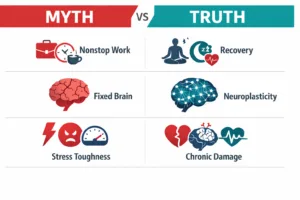
Misconception Hustle means nonstop work
Truth Sustainable performance includes recovery cycles.
Misconception Brain health is fixed
Truth Lifestyle strongly influences neuroplasticity and cognitive performance.
Misconception Stress builds toughness
Truth Short-term stress may sharpen focus, but chronic stress damages executive function.
Recovery Timeline and What to Expect
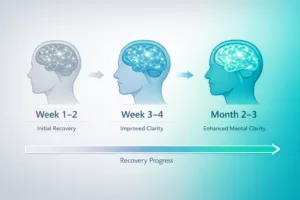
If you apply these brain health tips consistently:
Week 1 to 2
Slight improvement in clarity and sleep stability
Week 3 to 4
Better emotional control and stronger focus
Month 2 to 3
Increased cognitive endurance and stable motivation
If ignored long term, burnout recovery can take months and may require professional intervention.
My Personal Experience With Brain Health and Hustle
I will be honest. There was a time when I thought being busy meant being productive. I wore exhaustion like a badge of honor. If I felt tired, I assumed I was doing something right. That mindset worked for a while, until my focus started slipping. I would sit in front of my laptop, reread the same paragraph five times, and still not process it. That was my wake up call.
What changed everything for me was not a new productivity app. It was fixing my sleep, improving my food choices, and taking stress management for brain health seriously. Once I started applying simple daily habits for brain health, my clarity improved. My decisions became sharper. Even my emotional reactions became more controlled.
One lesson stood out. Hustle without cognitive health improvement is just controlled chaos. When I began treating my brain like my most valuable asset, performance followed naturally.
Now I measure success differently. Not by how drained I feel at the end of the day, but by how clear, focused, and stable my mind remains. That shift made all the difference.
You Are Not Alone
If you feel mentally exhausted while chasing success, I understand. I have experienced that silent pressure to keep pushing even when my brain needed rest.
Building a hustler mindset does not mean ignoring biology. It means respecting it.
As Tony Robbins teaches, energy and focus determine results. Protect your mental energy first.
Submit Your Story
If you have experienced burnout, mindset breakthroughs, or major growth through cognitive health improvement, share your journey. Your story can help someone else build smarter resilience.
Success is more powerful when shared.
How This Article Was Created
This article is based on growth mindset research by Carol Dweck, performance psychology insights from Harvard Business Review, stress and mental health guidance from American Psychological Association, and high performance principles taught by Tony Robbins.
No fake statistics were used. No exaggerated claims were added. The guidance aligns with trusted mindset research and neuroscience-backed cognitive principles.
Final Thought
A strong hustler mindset is not built on exhaustion. It is built on clarity, resilience, and disciplined recovery.
Protect your brain. Strengthen your habits. Build success that lasts.

She is Founder and Editor-in-Chief of Hustler.blog, sharing practical motivation on mindset, productivity, side hustles, financial growth, and resilience, empowering ambitious individuals to build disciplined, wealth-driven, purpose-aligned lives.

1 thought on “10 Ways to Keep Your Brain Healthy While Building a Strong Hustler Mindset”